

Paphiopedilum, from Paphos, the birthplace of Aphrodite, and Greek pedilon, slipper. More than 70 species in tropical Asia. Grow usually as terrestrial, but sometimes epiphytic or lithophytic. Plants have no pseudobulbs. They are relatively easy to cultivate. As a general rule, species with mottled leaves, prefer higher temperatures and those with plain solid colored leaves. Also a general rule of thumb is that mottled leaf Paphs also prefer lower like levels than those Paphs with solid green leaves. Plants need water throughout the year, but not allowed to remain wet for long periods of time. A free draining mix is recommended. We use bark, charcoal, perlite, sphagnum, and rocks in combination that holds moisture but does not remain wet for long periods. ‘The Pouch Orchid’


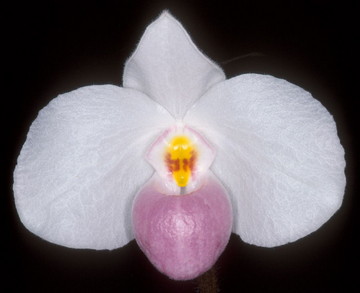
Phragmipedium for Greek phragma, division or partition and pedilon, slipper referring to the slipper shaped lip. More than 200 species in Mexico, Central and South America. In nature they can grow as terrestrial, lithophytic, or sometimes a epiphytic. Phragmipedium from in seepage areas and require more moisture throughout the year than Paphiopedilums They will grow in intermediate conditions with light to moderate shade in a free-draining compost based on bark, spaghnum moss, rocks, perlite, charcoal, or combinations of any of those. Mix ingredient combinations can be many. It is most important for the mix to be free draining. Many growers are successful when Phragmipediums are grown in shallow trays of water. The name Phragmipedium is often shortened to Phrag! One of Linda’s favorite orchids to grow. Phragmipediums are easy to grow and rewarding.
Look for Phragmipedium division listing soon! We have purchased a large Phragmipedium collection and they have all been repotted April/May. If you have a special Phragmipedium you are seeking, go ahead and ask before it is added to website or division listing.